
Weight loss is about far more than willpower.
When hormones are out of balance, the body stores more fat, produces more hunger signals, slows metabolism, and resists weight loss — even when you're eating well and exercising regularly. Addressing the hormonal root cause alongside appetite regulation is why combining hormone therapy with GLP-1 treatment often produces dramatically better results than either approach alone.
Have you ever felt like you're doing everything right — eating healthy, exercising regularly, watching your portions — yet the scale simply refuses to move? If so, you're not alone, and you're not failing. Hormones play a far more significant role in weight management than most people realize. When they become imbalanced, losing weight can feel frustratingly difficult even when you're making genuinely healthy choices.
How Hormones Affect Weight Loss
Many people are taught that weight loss is a simple equation — eat less, move more. While calories matter, hormones fundamentally influence how your body uses those calories. Two people eating the exact same diet can experience completely different weight loss outcomes based on their hormonal health alone.
Hormonal imbalances can affect:
- How hungry you feel throughout the day
- Intensity and frequency of food cravings
- Where and how your body stores fat
- How much muscle mass you retain
- How efficiently your body expends energy at rest
- Your blood sugar stability and insulin response
- Sleep quality — which then compounds all of the above
6 Hormones That Can Sabotage Weight Loss
Insulin is one of the most important hormones in weight management. Its primary role is moving glucose from the bloodstream into cells to be used for energy. When insulin resistance develops, cells stop responding to its signals — so the body produces more and more insulin, creating a cascade of metabolic problems that make fat loss significantly harder.
- Increased fat storage — especially around the abdomen
- More frequent hunger even after eating
- Energy crashes after meals
- Difficulty losing weight despite calorie restriction
- Common in obesity, prediabetes, and PCOS
Often called the "stress hormone," cortisol is designed for short-term survival — but modern life keeps it chronically elevated. High cortisol doesn't just affect mood; it directly influences where your body stores fat and how aggressively it holds onto it.
- Increased appetite — especially for sugar and carbohydrates
- Fat storage concentrated around the abdomen
- Disrupted sleep — which worsens every other hormonal issue
- Increased inflammation that slows metabolism
- Driven by chronic stress, overwork, and under-recovery
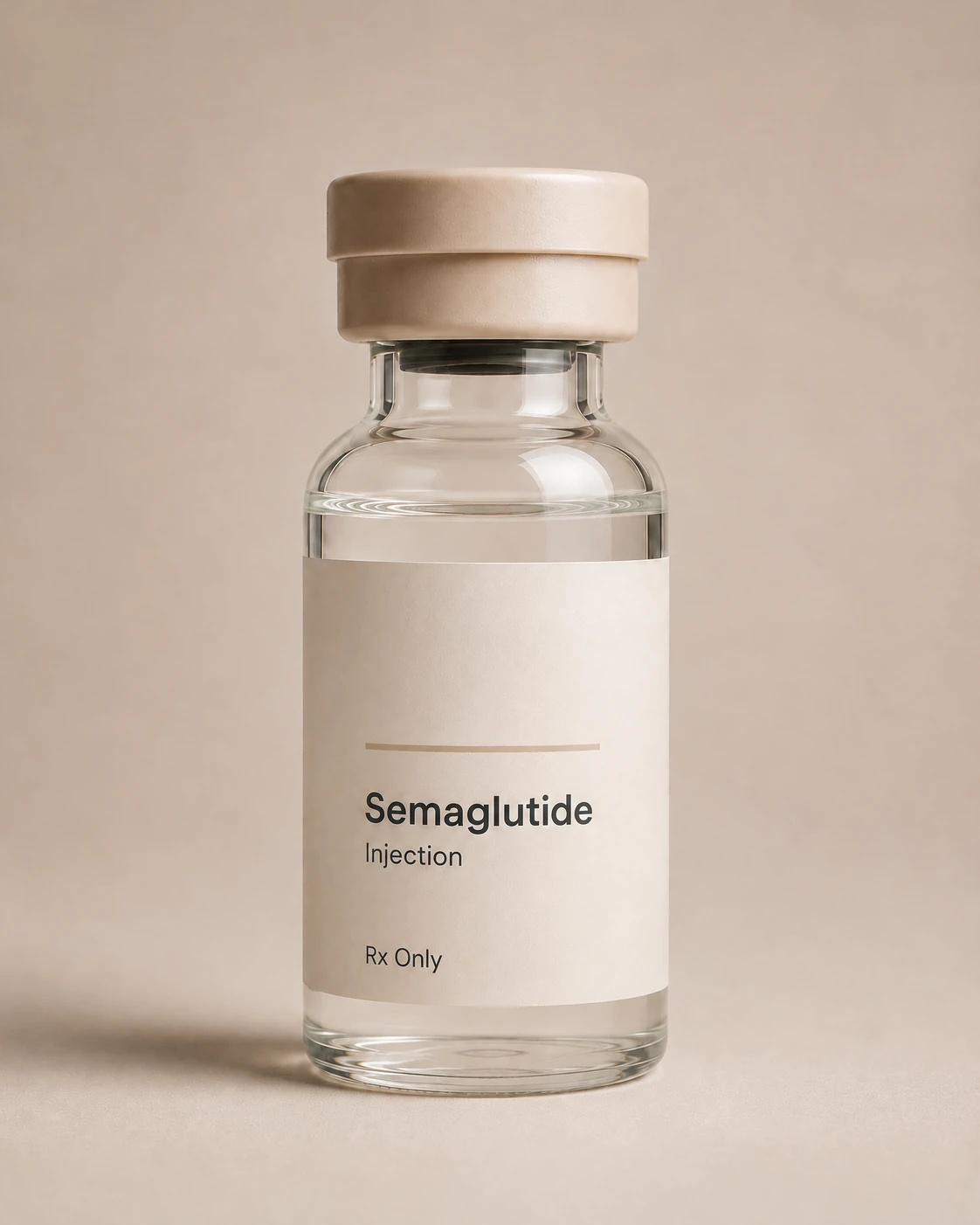
GLP-1 medications like Semaglutide and Tirzepatide directly address the hunger and blood sugar regulation problems that hormonal imbalance creates — helping restore the calorie deficit that hormones were actively fighting against. Read our guide: How Do GLP-1 Medications Work? →
Women often notice significant weight gain during perimenopause and menopause — and declining estrogen is a primary driver. This isn't a willpower problem. Estrogen directly influences metabolism, fat distribution, muscle mass, and appetite. When it declines, the body's weight regulation system shifts fundamentally.
- Fat storage shifts from hips and thighs to the abdomen
- Metabolism slows as estrogen declines
- Changes in appetite and satiety signals
- Accelerated muscle loss compounds the metabolic slowdown
- Especially pronounced during perimenopause and menopause
The thyroid gland acts as the body's metabolic thermostat — controlling how fast or slow the body burns energy. When thyroid hormone levels are too low (hypothyroidism), metabolism slows dramatically and weight loss becomes extremely difficult regardless of diet or exercise effort.
- Weight gain despite no change in eating habits
- Persistent fatigue and low energy
- Brain fog and difficulty concentrating
- Dry skin and hair thinning
- Often undiagnosed — a simple blood test can screen for it
Two hormones act as the body's appetite control system. Ghrelin — the "hunger hormone" — signals when it's time to eat. Leptin — the "fullness hormone" — signals when you've had enough. When these hormones become disrupted through weight gain, poor sleep, or metabolic dysfunction, the system works against you — making you feel persistently hungry regardless of how much you've eaten.
- Elevated ghrelin increases hunger and cravings constantly
- Leptin resistance means fullness signals don't register properly
- Emotional eating and compulsive snacking often follow
- Maintaining any calorie deficit becomes extremely difficult
Sleep isn't just rest — it's when the body resets its hormonal balance. Even one or two nights of poor sleep measurably increases ghrelin, decreases leptin, raises cortisol, and impairs insulin sensitivity. Chronic poor sleep — which is common during perimenopause — creates a compounding hormonal problem that makes weight management significantly harder regardless of diet or exercise.
- Ghrelin increases — more hunger throughout the next day
- Leptin decreases — harder to feel satisfied after eating
- Cortisol rises — more abdominal fat storage
- Insulin sensitivity worsens — more fat storage from the same foods
Signs Hormones May Be Affecting Your Weight
These symptoms don't automatically confirm a hormonal imbalance — but experiencing several simultaneously is a strong signal worth discussing with a healthcare provider:
Can Hormonal Weight Gain Be Treated?
Yes — and this is the most important point in this entire article. Hormonal challenges do not automatically prevent successful weight loss. The key is identifying the underlying cause and addressing it directly. For many patients, this means treating both the hormonal root cause and the appetite regulation problem simultaneously.
Hormone Therapy
Physician-prescribed bioidentical estrogen, progesterone, and DHEA can restore balance, reduce belly fat accumulation, improve sleep, and support metabolic function. $100/month →
GLP-1 Medication
Semaglutide and Tirzepatide directly address the hunger and blood sugar dysregulation that hormonal imbalance creates — making calorie restriction feel manageable rather than miserable. From $90/month →
Nutritional Changes
Protein-forward eating, reduced refined carbohydrates, and balanced meals support insulin sensitivity and reduce cortisol spikes throughout the day.
Sleep Optimization
Addressing sleep — through hormone therapy where night sweats are involved, or sleep hygiene improvements — can reset ghrelin, leptin, and cortisol levels significantly.
Exercise Adjustments
Resistance training preserves and builds muscle mass — counteracting the metabolic slowdown caused by hormonal decline and aging.
Medical Evaluation
A thorough assessment — including lab work for thyroid, insulin, and sex hormones — can identify the specific imbalances driving weight gain and guide a targeted treatment plan.
Hormone therapy + GLP-1
address the full picture.
Many Luma Health patients combine women's hormone therapy with Semaglutide or Tirzepatide. Hormone therapy addresses the underlying metabolic and hormonal disruption. GLP-1 treatment addresses appetite regulation and blood sugar control. Together, they tackle the full spectrum of why weight loss was so difficult in the first place.
Address the root cause.
Not just the symptoms.
Luma Health offers physician-prescribed hormone therapy and GLP-1 weight loss treatment — individually or combined. Free assessments, same-day visits, free shipping.
View All Treatments → Or start your free health assessmentFrequently Asked Questions
Hormones can significantly impair weight loss by increasing appetite, slowing metabolism, promoting fat storage, and disrupting sleep — all of which make maintaining a calorie deficit extremely difficult. Weight loss is still possible with hormonal imbalance, but addressing the underlying hormonal factors produces dramatically better and more sustainable results.
Several hormones contribute to abdominal fat accumulation. Cortisol is the primary driver of belly fat, particularly in response to chronic stress. Declining estrogen during perimenopause shifts fat storage toward the abdomen. Insulin resistance also promotes visceral fat accumulation. Often it's a combination of multiple hormonal factors rather than a single one.
Several factors beyond diet can drive weight gain — including hormonal imbalances (estrogen, cortisol, thyroid, insulin), sleep deprivation, chronic stress, certain medications, and underlying metabolic conditions. If your diet and exercise haven't changed but your weight has, a hormonal evaluation with a licensed healthcare provider is worth considering.
Declining estrogen shifts fat storage toward the abdomen, slows metabolism, accelerates muscle loss, disrupts sleep, and affects insulin sensitivity — all simultaneously. This is why menopause-related weight gain often feels different and more resistant than earlier weight gain in life. Read our full guide: Perimenopause vs Menopause →
Common signs include unexplained weight gain, difficulty losing weight despite diet and exercise, intense cravings, persistent fatigue, mood swings, irregular periods, and poor sleep. Laboratory testing can measure specific hormone levels and identify the underlying imbalances. Read our full guide to the 7 signs of hormonal imbalance →