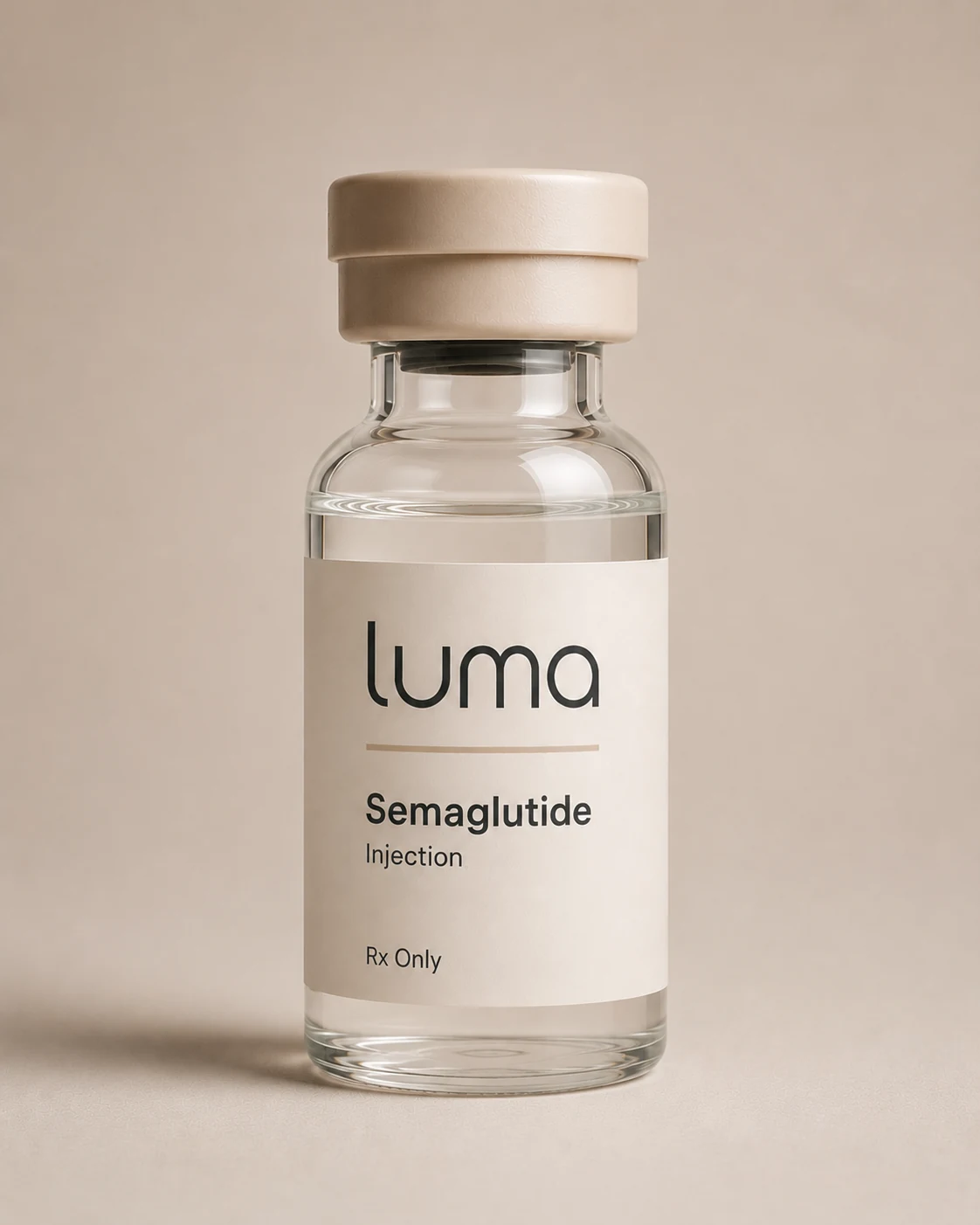
For type 2 diabetes, GLP-1 receptor agonists and basal insulin lower glucose in different ways. Which role is appropriate depends on the person, the exact product, and the clinical situation.
GLP-1 receptor agonists help the body respond to meals through incretin signaling. Basal insulin supplies background insulin. ADA guidance generally prefers a GLP-1–based medicine before insulin when more glucose lowering is needed and there is no compelling reason for insulin, because trial evidence shows lower hypoglycemia risk and favorable weight effects; gastrointestinal effects are more common. Insulin may still be necessary, and the two can be used together in a clinician-led plan.[1]
They work through different pathways
Semaglutide is one example of a GLP-1 receptor agonist. Its FDA label says it stimulates insulin secretion and reduces glucagon secretion in a glucose-dependent way; it also delays early post-meal gastric emptying. Basal insulin is different: it provides background insulin rather than activating the GLP-1 receptor. The reviewed insulin-glargine label describes a long-acting insulin analog given once daily and individualized according to glucose-monitoring results, goals, type of diabetes, and prior insulin use.[2] [3]
Neither label speaks for every medicine in its broad category. A GLP-1 product’s indication, formulation, dose escalation, and warnings are product-specific. Basal insulin is also not a synonym for every insulin: rapid-acting, short-acting, intermediate, premixed, long-acting, and ultra-long-acting insulins have different roles. NIDDK lists long-acting insulin as having no peak and an approximately 24-hour duration, but an exact product label and care plan govern its use.[4]
| Question | GLP-1 receptor agonist example | Basal-insulin example |
|---|---|---|
| Core approach | Semaglutide directly activates the GLP-1 receptor and has glucose-dependent effects on insulin and glucagon secretion. | Insulin glargine is a long-acting insulin analog that provides background insulin. |
| Reviewed label example | Ozempic is approved for glycemic control in adults with type 2 diabetes, plus specified cardiovascular and kidney-risk indications in defined adults. | LANGLARA, an insulin glargine biosimilar, is approved to improve glycemic control in adults and children with diabetes. |
| Weight and low glucose | ADA describes favorable weight effects and lower hypoglycemia risk than basal insulin in relevant trials, with more gastrointestinal effects. | The reviewed label lists hypoglycemia and weight gain among adverse reactions; monitoring is central when regimens change. |
| Do not infer | That every GLP-1 medicine shares semaglutide’s indications or results. | That every insulin, insulin concentration, device, or basal-insulin plan is interchangeable. |
This comparison must never be used to withdraw needed insulin
This article concerns type 2 diabetes. Do not stop, reduce, or replace prescribed insulin because of this comparison. NIDDK states that people with type 1 diabetes must take insulin because the pancreas does not make it. The reviewed insulin-glargine label says that people with type 1 diabetes need it with short-acting insulin. That is not a role for a GLP-1 receptor agonist to replace.[3] [4]
Basal insulin is not recommended for treatment of diabetic ketoacidosis (DKA). Suspected DKA, ketosis, severe insulin deficiency, or urgent illness needs prompt clinical assessment and appropriate acute treatment. For type 2 diabetes, ADA says insulin should be considered with severe hyperglycemia, especially with catabolic features such as weight loss or ketosis; it describes common practice of initiating insulin for glucose at or above 300 mg/dL, A1C above 10%, symptoms of hyperglycemia, or evidence of catabolism. These are clinical-context signals, not reader instructions or a reason to delay urgent care.[1] [3]
A direct trial compared one semaglutide regimen with insulin glargine
SUSTAIN 4 was a 30-week, open-label randomized trial in insulin-naive adults whose type 2 diabetes was inadequately controlled on metformin with or without a sulfonylurea. It compared weekly semaglutide 0.5 mg or 1.0 mg with daily insulin glargine. From a mean baseline A1C of 8.17%, average A1C fell by 1.21 and 1.64 percentage points with the two semaglutide doses versus 0.83 percentage points with glargine. Average body weight changed by −3.47 kg and −5.17 kg with semaglutide versus +1.15 kg with glargine.[5]
Severe or blood-glucose-confirmed hypoglycemia occurred in 4% and 6% of the semaglutide groups versus 11% of the glargine group. Nausea was the most frequent adverse event with semaglutide, and gastrointestinal events contributed to more discontinuations. These are group averages from a named, older regimen with specific background medicines, titration, and 30-week follow-up. They do not establish that every GLP-1 receptor agonist outperforms every basal insulin, predict an individual outcome, or settle a contraindication, access, or tolerability question.[5]
Why the comparison is not a scorecard. ADA emphasizes shared decision-making that considers glucose goals, cardiovascular, kidney, and weight-related conditions, hypoglycemia, adverse effects, cost and access, and individual preferences. A medicine may be reasonable because it fits that full context, not because it wins one outcome in a trial.[1]
Titration and monitoring are clinician-guided for both paths
Basal-insulin dose adjustment is individualized and depends on glucose-monitoring results and the person’s goals. The reviewed glargine label calls for more frequent glucose monitoring when an insulin regimen changes and says dosage adjustments should occur under medical supervision with appropriate monitoring. It also notes that activity, meal patterns, illness, kidney or liver function, and other medicines can matter. Insulin changes can cause serious hypoglycemia or hyperglycemia when managed incorrectly.[3]
The Ozempic label uses a staged initiation and escalation schedule to reduce gastrointestinal adverse reactions. It also says that combining semaglutide with insulin can increase hypoglycemia risk. A prescriber and pharmacist should review the full regimen and monitoring plan before a GLP-1 medicine is started, insulin is changed, or either is stopped. This page intentionally gives no individualized titration, replacement, or dose-reduction instructions.[2] [3]
Combination can be an option, not an automatic substitute
Insulin and a GLP-1 receptor agonist are sometimes used together. ADA reports that, when insulin therapy is intensified, combining it with a GLP-1 receptor agonist or a dual GIP/GLP-1 receptor agonist can provide greater and more durable glucose-lowering effects, along with weight and hypoglycemia advantages, than insulin intensification alone. It also identifies cost, access, and tolerability as important considerations. This evidence supports an individualized combination conversation; it does not mean a GLP-1 medicine permits a reader to discontinue insulin.[1]
The semaglutide and glargine labels each reinforce the need for monitoring when therapies are combined or changed. The relevant question is not simply “GLP-1 or insulin?” It is whether the exact regimen safely serves the person’s diabetes type, glucose pattern, current medicines, kidney and liver function, prior adverse effects, and practical ability to use and monitor treatment.[2] [3]
Safety, pregnancy, and access require product-specific planning
For Ozempic, the label lists a personal or family history of medullary thyroid carcinoma, multiple endocrine neoplasia syndrome type 2, and serious hypersensitivity as contraindication questions. It also addresses pancreatitis, retinopathy complications, gallbladder disease, severe gastrointestinal reactions, kidney injury related to volume depletion, and delayed gastric emptying. The glargine example has different central risks: life-threatening hypoglycemia, medication mix-ups, hypersensitivity, hypokalemia, injection-site effects, and weight gain. A class label cannot replace an exact-product review.[2] [3]
Pregnancy and pregnancy planning are separate diabetes-care decisions. Semaglutide has limited human pregnancy data, potential fetal risk in animal studies, and a label instruction to stop at least two months before a planned pregnancy. The glargine label says published pregnancy studies have not reported a clear association with adverse developmental outcomes, while poorly controlled diabetes itself carries risk. NIDDK states that insulin is safe to take during pregnancy, but this does not make a particular regimen automatic. A prenatal-diabetes team should guide treatment before changing any medicine.[2] [3] [4]
Approved-product evidence does not transfer to compounded GLP-1 preparations
The labels and direct trial discussed here concern FDA-approved finished products. FDA says compounded GLP-1 drugs are not FDA approved and are not reviewed by FDA for safety, effectiveness, or quality before marketing. FDA says compounded drugs should be used only when a patient’s medical needs cannot be met by an FDA-approved drug. Results for branded semaglutide do not establish a compounded product’s quality, bioequivalence, safety, effectiveness, or outcomes.[6]
For related education, see what semaglutide is, GLP-1 medications versus SGLT2 inhibitors, and Luma’s treatment information.
Compare the exact regimen and care context,
not a class label alone.
Type of diabetes, glucose pattern, safety factors, pregnancy plans, other medicines, monitoring capacity, tolerability, and access all belong in a clinician-guided conversation.
Explore Treatment Information →Frequently asked questions
No. They use different mechanisms and have different product-specific labels, monitoring needs, risks, and roles. A GLP-1 receptor agonist may be preferred before insulin in many type 2 diabetes situations, but insulin can be necessary and the two can be used together. Do not change prescribed insulin without the prescribing team.
No. People with type 1 diabetes require insulin. The reviewed basal-insulin label says it must be used with short-acting insulin for type 1 diabetes. Suspected DKA or severe insulin deficiency needs urgent clinical assessment.
They sometimes are used together under clinical supervision. ADA describes potential glucose, weight, and hypoglycemia advantages over intensifying insulin alone, while the semaglutide label warns that use with insulin can increase hypoglycemia risk. Monitoring and any medication changes are individualized.
No. The cited trial evaluated a specific study formulation, not a compounded preparation. FDA does not review compounded GLP-1 drugs for safety, effectiveness, or quality before marketing, so branded-product results do not establish a compounded preparation’s outcomes or bioequivalence.
References
- American Diabetes Association Professional Practice Committee. Pharmacologic Approaches to Glycemic Treatment: Standards of Care in Diabetes—2026.
- FDA. Ozempic (semaglutide) injection prescribing information. Reference ID 5808230.
- DailyMed. LANGLARA (insulin glargine-aldy) injection prescribing information.
- National Institute of Diabetes and Digestive and Kidney Diseases. Insulin, Medicines, & Other Diabetes Treatments.
- Aroda VR, et al. Efficacy and safety of once-weekly semaglutide versus once-daily insulin glargine: SUSTAIN 4.
- FDA. FDA’s Concerns with Unapproved GLP-1 Drugs Used for Weight Loss. Content current September 1, 2026.