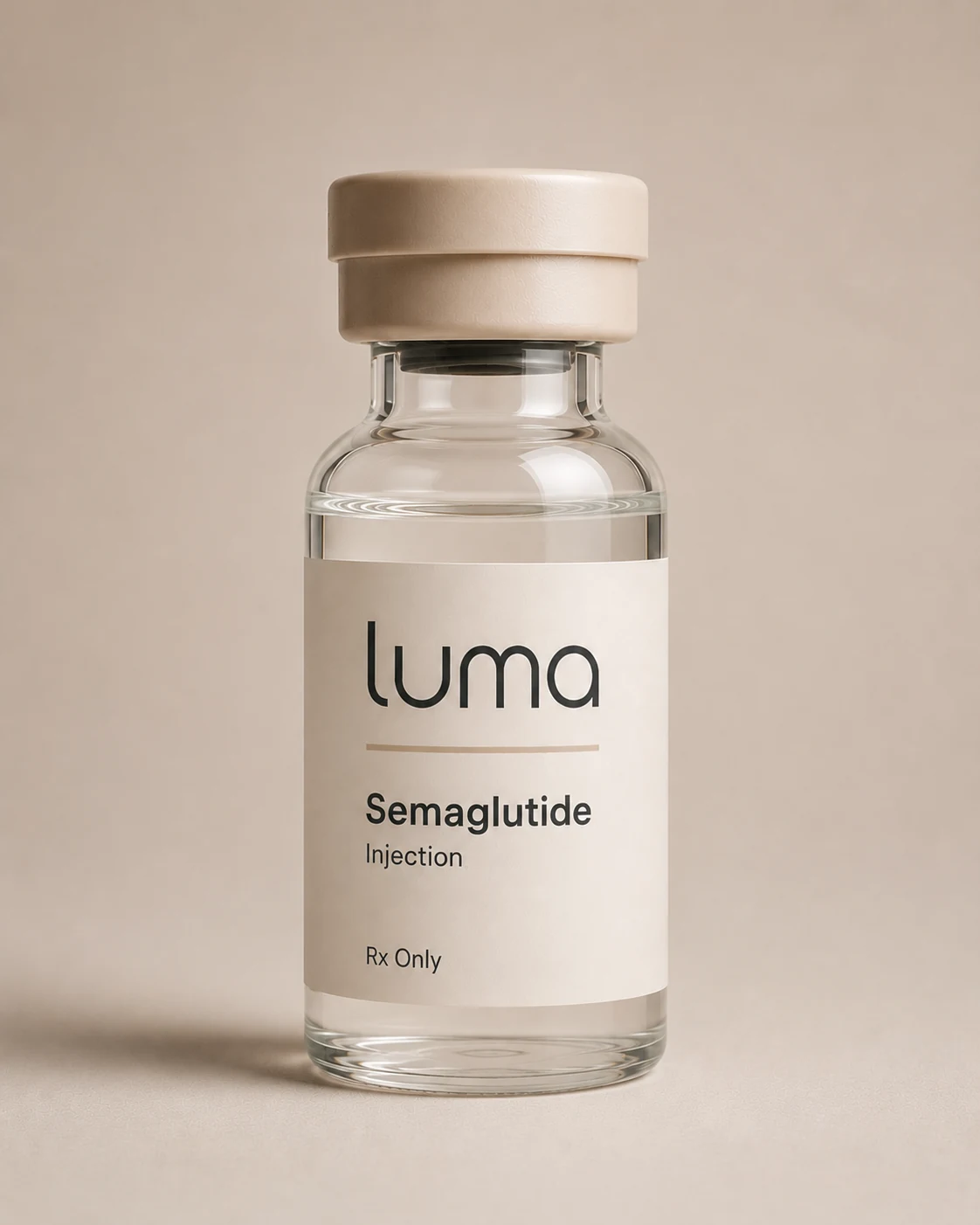
GLP-1–based medicines are ongoing prescription treatments; intragastric balloons are temporary devices placed and removed through procedures.
Both can support weight loss when paired with nutrition, activity, behavior change, and follow-up. Neither is universally better. The practical choice depends on the exact FDA-labeled product or device, eligibility, medical history, willingness to take ongoing medicine, comfort with endoscopy and sedation, access, and the plan for maintaining results after treatment.[1] [2] [3]
There is no head-to-head randomized trial in the sources reviewed for this article that directly assigned people to current Wegovy or Zepbound treatment versus an intragastric balloon. Percentages from separate trials therefore provide context, not a ranking or a forecast for one person. If you are also comparing more permanent procedures, see Luma Health’s guides to GLP-1 medicines versus endoscopic sleeve gastroplasty and GLP-1 medicines versus bariatric surgery.
How the two options differ
An intragastric balloon takes up space inside the stomach to promote earlier fullness. It is not bariatric surgery: no stomach tissue is removed and the intestines are not rerouted. ORBERA, for example, is a saline-filled silicone balloon placed with an endoscope. Its FDA-approved indication is for adults with body mass index (BMI) 30–40 who have not achieved adequate results with supervised diet, exercise, and behavior programs. It must be used with a long-term supervised diet and behavior-modification program.[3] [4]
Balloon approval and treatment duration are device-specific. ORBERA has a maximum placement period of six months. The adjustable Spatz3 system has a maximum period of eight months and a different labeled population. Both require planned removal. An FDA approval does not mean that every balloon brand is currently offered in every market, so patients should verify the exact device and current instructions with an experienced center.[3] [4] [5]
Wegovy is a GLP-1 receptor agonist. Zepbound activates GIP and GLP-1 receptors. Their FDA labels describe long-term weight reduction and maintenance in adults with obesity or adults with overweight plus at least one weight-related condition, alongside reduced calories and increased physical activity. Treatment involves dose escalation, ongoing injections, monitoring, and a maintenance plan.[1] [2]
| Question | GLP-1–based medicine | Intragastric balloon |
|---|---|---|
| Delivery | Prescription medicine used on a continuing weekly schedule for the products discussed here. | Device placed and removed endoscopically under sedation. |
| Treatment window | Ongoing while effective, tolerated, prescribed, and accessible. | Temporary; commonly six or eight months depending on the specific device. |
| Early burden | Dose escalation and management of gastrointestinal adverse effects. | Preparation, sedation, early dietary progression, and adaptation to the device. |
| End of treatment | Stopping can be followed by weight regain; changes should be clinician-guided. | Removal is mandatory, so the post-removal maintenance plan begins immediately. |
What the evidence shows—and does not show
In a U.S. randomized trial of 255 adults with BMI 30–40, ORBERA plus lifestyle intervention produced mean total body-weight change of −10.2% at six months, when balloons were removed, compared with −3.3% with lifestyle intervention alone. At 12 months—six months after removal—the changes were −7.6% and −3.1%. The trial demonstrates an added short-term effect and a group-level difference after removal, but it also shows why maintenance matters.[6]
In FDA-reviewed medication trials, mean body-weight change in Wegovy Study 2 was −14.9% at 68 weeks with semaglutide 2.4 mg versus −2.4% with placebo. In Zepbound Study 1, the 72-week mean changes were −15.0%, −19.5%, and −20.9% at 5, 10, and 15 mg, compared with −3.1% with placebo. All groups received diet and activity support.[1] [2]
These numbers are not a direct contest. The trials differed in participants, diabetes status, treatment duration, dose escalation, devices, lifestyle programs, endpoints, and missing-data methods. A higher number from one study cannot prove that one option works better for a particular person.
Durability evidence also differs. A balloon has a scheduled end date. In the ORBERA trial, average loss diminished after removal but remained different from control at 12 months. For medicine, withdrawal trials show that benefits can diminish when treatment stops: participants in a STEP 1 extension regained about two-thirds of their prior semaglutide-associated loss during the following year, and SURMOUNT-4 found substantially more regain after participants switched from tirzepatide to placebo than among those continuing treatment.[7] [8]
Eligibility is device- and patient-specific
Mayo Clinic describes a typical balloon candidate as an adult with BMI 30–40 who has not achieved adequate results with diet and exercise, has not had prior stomach or esophageal surgery, and is willing to participate in follow-up and behavior therapy. The device instructions control. Prior gastrointestinal or bariatric surgery, active inflammatory gastrointestinal disease or ulcers, bleeding risk, anatomical narrowing, and some hiatal hernia or reflux circumstances are examples of factors that can exclude a candidate.[4] [5] [9]
Medication candidacy follows the specific label and clinician assessment. For Wegovy and Zepbound, history of medullary thyroid carcinoma or multiple endocrine neoplasia syndrome type 2 is a contraindication. Pregnancy plans, pancreatitis or gallbladder history, severe gastrointestinal disease, medicines that affect glucose, and other health conditions can change the decision. Neither product is recommended for severe gastroparesis.[1] [2]
A person may meet a BMI threshold and still not be a suitable candidate. Conversely, being uncomfortable with one route does not make another automatically safe. A procedural team evaluates endoscopy and sedation risk; a prescriber evaluates medication risk, interactions, and monitoring needs.
Safety and symptoms that should not wait
Nausea, vomiting, abdominal discomfort, constipation, and diarrhea are important medication adverse effects. Both medicine labels warn about pancreatitis, gallbladder disease, acute kidney injury related to volume depletion, severe gastrointestinal reactions, serious hypersensitivity, and aspiration reports during general anesthesia or deep sedation. Product-specific prescribing information should guide care rather than a generalized class summary.[1] [2]
Early gastrointestinal symptoms are also common with balloons. In the ORBERA randomized trial, nausea occurred in 86.9%, vomiting in 75.6%, and abdominal pain in 57.5%; 18.8% underwent removal before six months for an adverse event or at the participant’s request. FDA has warned that liquid-filled balloons have had reports of spontaneous hyperinflation and acute pancreatitis, sometimes requiring hospitalization and early removal. Serious risks can also include obstruction, ulcer, perforation, aspiration, or bleeding.[6] [9] [10]
Severe or persistent vomiting, inability to keep fluids down, severe abdominal or back pain, abdominal swelling, breathing difficulty, bleeding, or allergic-reaction symptoms require prompt medical contact or urgent evaluation under the treatment team’s instructions. Waiting for a routine follow-up can allow dehydration or a device complication to worsen.
Recovery, removal, and long-term follow-up
Mayo Clinic describes balloon placement as an outpatient endoscopy that often takes about 30 minutes, with discharge one to two hours later. Diet generally progresses from clear liquids to liquids, then soft food, and regular food over roughly three weeks. The exact plan is set by the treating center. Removal is another procedure, not an optional extra.[9]
Medication usually has no procedural downtime, but tolerability can change during escalation. Refill access, monitoring, adherence, and the response to side effects remain ongoing tasks. Before a balloon procedure, patients should disclose GLP-1 or GIP/GLP-1 use to both the prescriber and the endoscopy team because the drug labels discuss pulmonary aspiration during anesthesia or deep sedation.[1] [2]
The American Gastroenterological Association recommends moderate- to high-intensity lifestyle intervention during balloon therapy and shared decision-making about the next step after removal, which might involve continued dietary intervention, pharmacotherapy, another balloon, or bariatric surgery depending on clinical context. This is not a routine instruction to combine treatments. Sequencing requires coordination.[11]
Questions for a shared decision
- Which exact product or device is under consideration? Ask for its FDA labeling, duration, and current availability.
- Do I resemble the studied population? Compare BMI, diabetes status, prior procedures, gastrointestinal history, and treatment goals.
- What is the complete burden? Include injections and monitoring, or placement, removal, sedation, dietary recovery, and follow-up.
- What happens after treatment? Plan for medication interruption, balloon removal, recurrence, and long-term support before beginning.
- What will insurance or cash payment cover? For a balloon, ask whether placement, removal, follow-up, and complication care are included. For medicine, verify the exact drug, dose, pharmacy route, and recurring clinical costs.
Mayo Clinic notes that balloon treatment may not be covered by insurance. Medicine coverage also varies by plan and indication. Neither FDA labeling nor a headline price answers the total-cost question.[1] [2] [9]
Compare the complete treatment course,
not one headline number.
A licensed clinician can assess medication candidacy. An experienced multidisciplinary endoscopy or bariatric program can evaluate balloon suitability, procedural risk, removal, and follow-up.
Explore Treatment Information →Frequently asked questions
No. It is a temporary device placed and removed endoscopically without removing stomach tissue. It still requires procedures, sedation, preparation, and monitoring.
The reviewed sources include no randomized head-to-head trial of current Wegovy or Zepbound treatment versus a balloon. Separate trial percentages cannot establish a winner.
It may be considered in some clinical situations. AGA guidance lists pharmacotherapy among possible post-removal strategies selected through shared decision-making. It is not appropriate for everyone.
References
- FDA. Wegovy prescribing information. Revised February 2026.
- FDA. Zepbound prescribing information. Revised 2026.
- FDA Devices@FDA. ORBERA Intragastric Balloon PMA P140008.
- FDA. ORBERA Intragastric Balloon System directions for use.
- FDA. Spatz3 Adjustable Balloon patient information.
- Courcoulas AP, et al. Intragastric balloon as an adjunct to lifestyle intervention: a randomized controlled trial.
- Wilding JPH, et al. Weight regain after withdrawal of semaglutide: STEP 1 extension.
- Aronne LJ, et al. Continued tirzepatide treatment for maintenance: SURMOUNT-4.
- Mayo Clinic. Intragastric balloon. Updated May 16, 2026.
- FDA. Potential risks with liquid-filled intragastric balloons.
- American Gastroenterological Association. Clinical practice guideline on intragastric balloons.